COSMIC RADIO
Installation and performance at STRP festival ‘The Art of Listening’
The word cosmic comes from the ancient Greek verb κοσμέω which means to order, or to arrange. It was especially used to speak about marshalling armies in place. This verb was then used by philosopher-poet-musician Pythagoras to describe the order seen in the stars.
Through our time researching the history of radio in the Netherlands, our preconceived notions of the cosmic have been brought “down to earth” to a different understanding which has driven us closer to the original definition of this word rather than its
Pythagorean version.
It is known that our urban environments create so much light that it blinds us from seeing the stars in our galaxy. Similarly, we create so much electromagnetic noise, that it is difficult to listen, in an urban environment, beyond the noises we humans create.
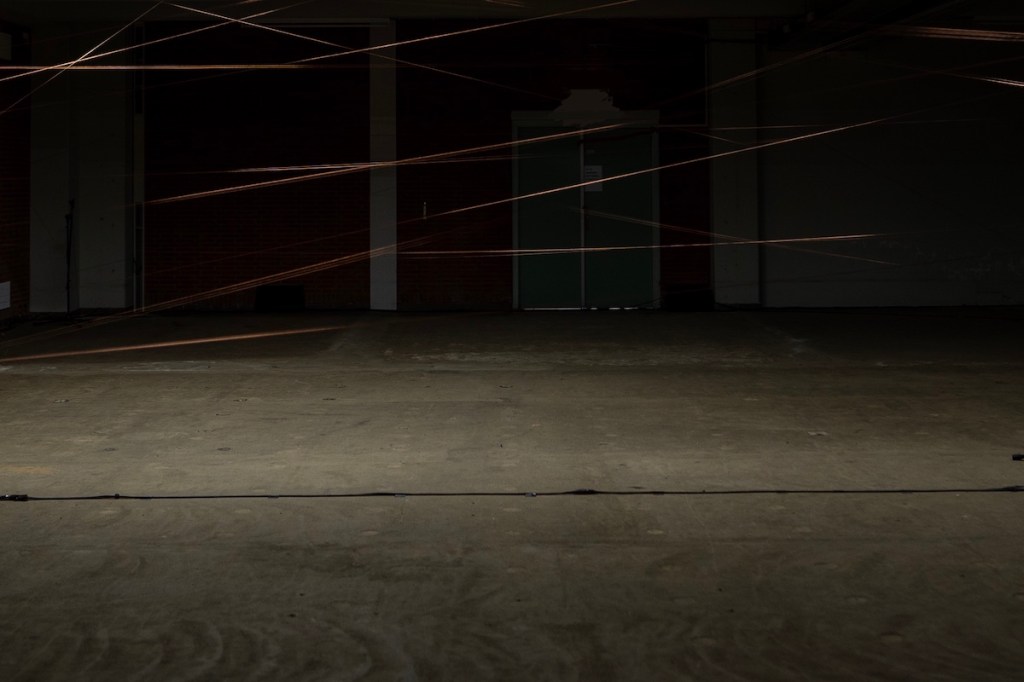
The antennas you see in this room have the potential for listening to events happening in the ionosphere and in the magnetic field lines of the earth but the sheer amount of electrical grid current and other urban noise makes it unlikely.
From radio telescopes covered in moss near Exloo, to military exercises soundtracking our visits to Radio Kootwijk, to telescopes built on a former Nazi transit camp in Westerbork, our time researching radio has shown us another kind of order, a terrestrial one, whose constant pulse is undeniable in any definition about what is really out there.
Installation
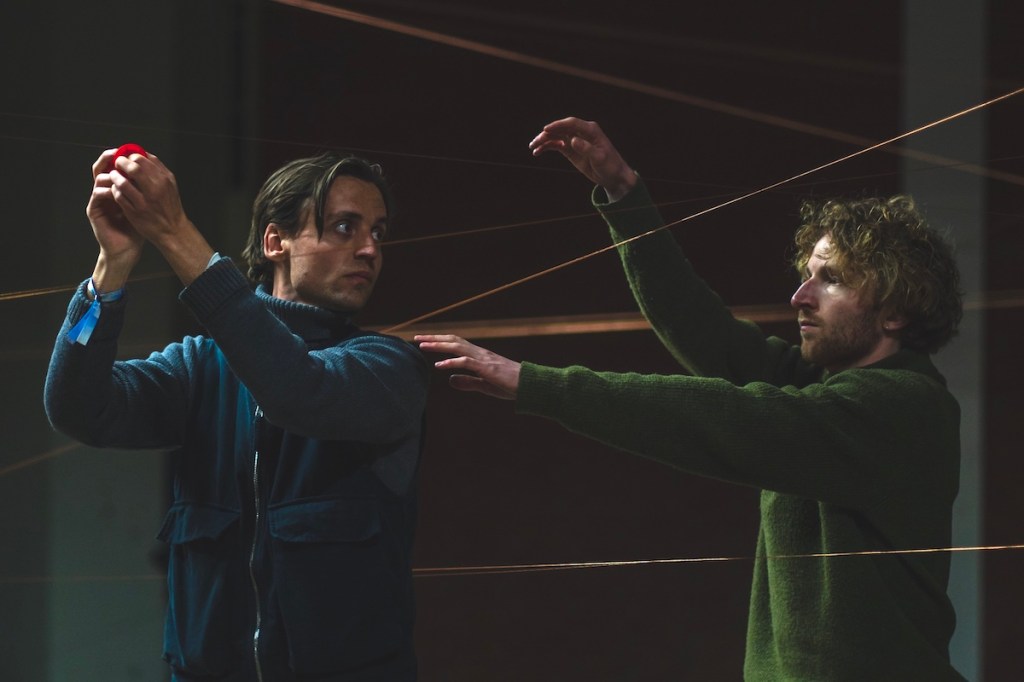
You are listening to a live sonic map of very low frequency electromagnetic waves passing through this room. Very low frequency waves can travel around the world and pass through solid objects including concrete buildings. Each copper structure in this space is an antenna, capturing different sounds
depending on the size, shape, and direction of its area.
We first started experimenting with a small antenna in the backyard of our temporary home in Eindhoven. Since April 1, we have been in residence searching for traces of social, colonial, and natural histories in the development of radio. In this first phase of our research, we have more questions than answers.
Our bodies help us listen to these questions. Where are the sounds in this room coming from? How will they change day to day? How do non-human beings feel the noise our electrical grids create? How does the sound affect us even when we can’t
hear it? We will continue to layer antennas in this space throughout the STRP Festival to reveal new sounds that may both situate us in Eindhoven and shift our perspectives to global phenomena that emit frequencies we might hear in this room.
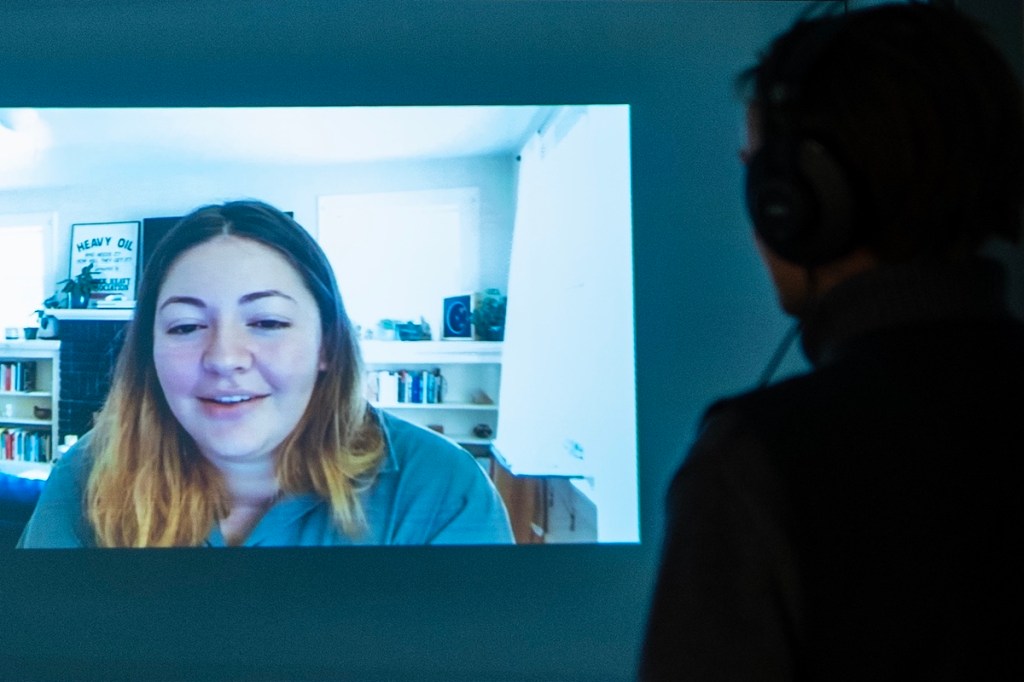
Film (31’34’’)
This is an in-progress visual archive of our collective research process at sites of radio infrastructure throughout the Netherlands. When we set out to learn about cosmic radio, we started with the Phillips company’s early production of radios and its shortwave radio broadcasting station called PHOHI for
Dutch citizens living in occupied Indonesia. The first radio broadcasts from the Netherlands to the so-called Dutch East Indies were sent via long wave from Radio Kootwijk, the first site we visited on April 4. When we arrived, we heard guns firing from a military base nearby.
When Philips sent the first PHOHI broadcasts from the Philips Laboratories in Eindhoven, Philips’ shortwave transmitters became a national pride. In 2004, Huizen’s city council voted to commemorate the Huizen Transmitters with a scaled down replica of the original structures, now located in the center of a roundabout.
Like a call and response, humans send and receive, hoping to be heard or found. The LOFAR Telescope Core, the second site we explored that day, looks like an unassuming array of panels and antenna dispersed in a field near Exloo, but underground fiber optic cables connect it to 51 other sites across Europe.
The telescope operates at the lowest observable frequencies from Earth. There is no fence around the telescope core and birds pass through to graze while moss grows on the antennae.
Our forth site, the Westerbork Synthesis Radio Telescope, is an array of 14 telescopes designed for large scale surveys of the northern sky, located at the site of the former Westerbork Nazi detention camp, which later became a refugee camp operated by the Dutch government. Humans have always yearned to
create new forms of intelligence, but when we use our bodies to understand our surroundings, we may find terrestrial intelligence that lives around us.
For the Cosmic Radio project, Shock Forest Group works with STRP Festival, Van Abbemuseum, TAC, NUL ZES en Van Abbehuis.
Cosmic Radio is presented by Unusual Suspects in collaboration with Powered by TINC and made possible by Brabant C, Stichting Cultuur Eindhoven, Eindhoven 247, Prins Bernhard Cultuurfonds, Fonds21 and the generous support of all cultural partners involved.
images by Marica de Michele
 Axel Coumans